
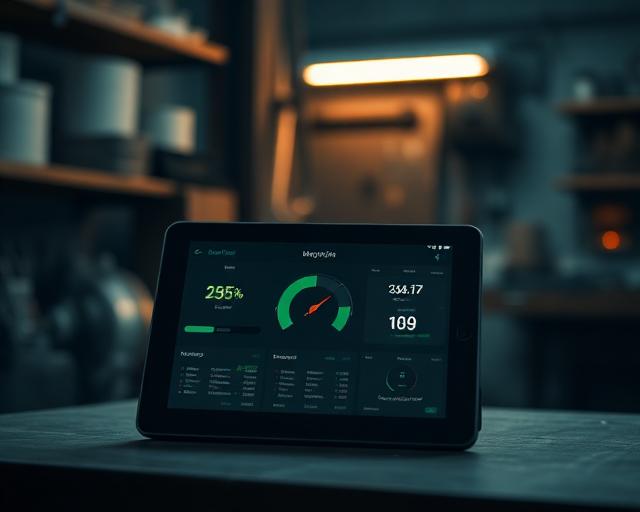
3 A.M. Problem 2 — for trades, fabrication & job shops
Is this job actually making money before it is over?
Is this job actually making money?
Jobs can look busy and billed, but unless you see true cost, charge-out and margin while the work is still live, you can still lose money and only find out after the fact.
The 30-second answer
You cannot manage live job profit from revenue alone. Start with real labour cost and the quote benchmark, then connect current job/task hours and cost to what you expected to sell. Watch current margin and cost vs charge-out while the job is still open so you can correct drift before final margin becomes history.
SEE LIVE JOB PROFIT
One current picture of what the job is earning.
QUOTED VS CURRENT MARGIN
Compare what you priced to what is happening.
COST VS CHARGE-OUT
Know what you are keeping, not just what you billed.
ACT WHILE IT IS OPEN
Stop waiting for the month-end autopsy.
Why the usual fixes keep failing
- 01
Looking at revenue or billing
Billed dollars tell you what you sold.
They do not tell you what you are keeping.
- 02
Waiting for month-end
By the time the final job-cost report arrives, the job may already be unfixable.
- 03
Using wage instead of true cost
The margin can look better than reality when the labour cost is incomplete.
- 04
Three reports, three versions
Quote, field time and cost in separate places make it hard to see one live job truth.
Does this sound familiar?
- The job looked good last week. Now nobody trusts the number.
- Billing is going out, but you still cannot say what you are keeping.
- The crew is busy, but the margin keeps sliding.
- You only find out the truth after payroll or month-end.
This is what it's costing you
A $250,000 job was quoted at an 18% margin but is now trending toward 10%:
$45,000 expected profit − $25,000 projected profit
$20,000gone on one job
Illustrative example of margin drift only — not a customer result.
Why it keeps happening
The data fragmentation problem — with a true-cost blind spot
The quote can be in one place, field hours in another and cost reports somewhere else. Even if every report is technically right, the owner still does not have one current picture of what the live job is earning. The deeper fix is to connect the quote benchmark, true cost and current job/task actuals so margin drift becomes visible while the job is still fixable.
What actually has to change
Know the true labour cost first.
Build the quote benchmark from real cost and target margin.
Use the same job/task structure when the work starts.
Track current hours and cost against what was quoted.
Compare current margin, cost and charge-out regularly.
Act on drift while the job is still open.
The PPS + PWP way to see live job profit
Profit Pulse System builds the engine. ProjectWatchPRO automates the work.
- 1Overhead Guru
- 2Labor Analyst
- 3Burden Builder
- 4Task Architect
- 5Bulletproof Quote
- 6Schedule Master
- 7Pulse Monitor
- 8Drift Detector
- 9Profit Pulse Loop
Used to build profit defense. Orange steps are the ones this problem depends on.
Why those steps matter here
- Overhead Guru, Labor Analyst
- Build the cost baseline the margin is measured against.
- Bulletproof Quote
- Price the work from real cost and a target margin.
- Pulse Monitor, Drift Detector
- See and correct the live job before the margin is history.
ProjectWatchPRO gives you
- Live Job Profit
- Estimated Margin vs Current Margin
- Profit to Date
- Charge Out vs Actual Cost
- Costs by Job and Task (cost code)
- Real-time variance and trend alerts
- One current job view the owner and PM can use
What gets better when you fix this
- Know which jobs are paying and which are leaking.
- Catch margin drift while you can still change the outcome.
- Make better calls on labour, schedule and billing.
- Stop waiting for month-end autopsies.
- Keep more of the profit you quoted.
Will this work here?
- Our jobs are all custom.
- Live comparison matters even more when every job is different, because you cannot rely on one standard outcome.
- Accounting already gives us job costing.
- The question is when the information arrives and whether the work is still fixable when you get it.
- I only care about final margin.
- Final margin teaches you what happened. Live margin gives you a chance to change what happens.
- Some costs arrive later.
- Use the best current cost picture available and make late-arriving costs visible in closeout. Do not pretend unavailable costs are already known.
The honest cost of waiting
- ~$24,200Next 30 days
- ~$48,400Next 60 days
- ~$72,600Next 90 days
Illustration assumes one active job leaking $1,100 per working day and 22 working days per month. Figures are illustrative examples, not documented client results. We replace them with your numbers during the Profit Recovery Review.
Questions owners ask
What is the difference between revenue and job profit?
Revenue is what you bill or sell. Job profit is what remains after the real cost of doing the work is applied.
How early can I know a job is drifting?
As soon as current hours and cost can be compared to the quote benchmark at a useful job and task level.
Why is final job costing not enough?
Final job costing is useful for learning, but it cannot save a job that already finished.
Do I need every cost posted perfectly to make a decision?
No system should pretend missing costs do not exist. The goal is a current, honest picture good enough to flag risk and improve as costs arrive.
Let's find out if this job is making money.
Use the Profit Recovery Review to diagnose the specific leak, quantify it with your company's numbers, and identify where to start.