
WHO IT'S FOR: WELDING & FABRICATING
KNOW WHAT EACH JOB IS MAKING BEFORE IT LEAVES THE SHOP.
Your welders can be busy all day and the job can still be going backwards.
Your shop can be full, welders busy, and jobs moving out the door — and profit can still disappear inside the work. The leaks are usually ordinary: labour priced from the wrong cost, wire and gas buried in overhead, overtime used to rescue the schedule, jobs blocked out by days instead of task hours, rework, and actual cost not being compared to the quote and charge-out until the job is already over. By then, the crew is on the next one and there is nothing left to fix.
Job Profit Live
Job 24-069 | Oilfield Skid Fabrication
- Quoted Hours
- 420
- Actual Hours
- 286
- OT Hours
- 48
- Profit %
- 17.2%
- True Cost $28,340
- Charge-Out $34,620
- Quote $39,500
- Profit $6,160
- Wire Cost $1,625
- Gas Cost $480

Fabrication job dashboard comparing quoted hours, actual hours, overtime, task cost, consumables and profit. Figures shown are illustrative examples.
What changes for Welding & Fabricating
- 01Know the true cost — See what the welder or fitter actually costs on this job.
- 02Put consumables on the work — Wire, gas, rods and discs stop disappearing into general overhead.
- 03Schedule people by the work — Assign employees to specific tasks and estimated hours.
- 04Catch the job going sideways early — Compare quote, charge-out and actual cost while the job is still in the shop.
- 05Close the job and bill faster — Finish strong in the shop so completed work turns into cash sooner.
Diagnostic: is this what is happening on your jobs?
A. Does this sound familiar?
- You quote from customer drawings, but the hours underneath the price live mostly in the estimator's experience and memory.
- The job gets put on the schedule for three days, a week, or two weeks — but nobody has scheduled fit-up, welding, finishing and inspection as separate work.
- Welding consumables are buried in overhead or 'shop supplies,' so you cannot see what this job is really using.
- A regular-time hour and an overtime hour are treated like the same hour until payroll proves otherwise.
- You only find out at month-end what the job actually made.
B. This is what it's costing you
- Example: $500,000 fabrication job.
- 3% profit margin = $15,000 profit.
- Finish 10% over on labour + consumables through OT, rework and poor visibility.
That's $15,000 of profit gone.
C. Why it keeps happening
- Labour cost is guessed, not calculated.
- Jobs are scheduled by days, not tasks.
- Consumables are not tracked to the work.
- Time and cost drift all day long.
- Extra work is done before it is priced or recorded.
- Nobody sees the real numbers until the job is over.
Bottom line: You don't have a profit problem. You have an information lag problem.
D. Profit Defended
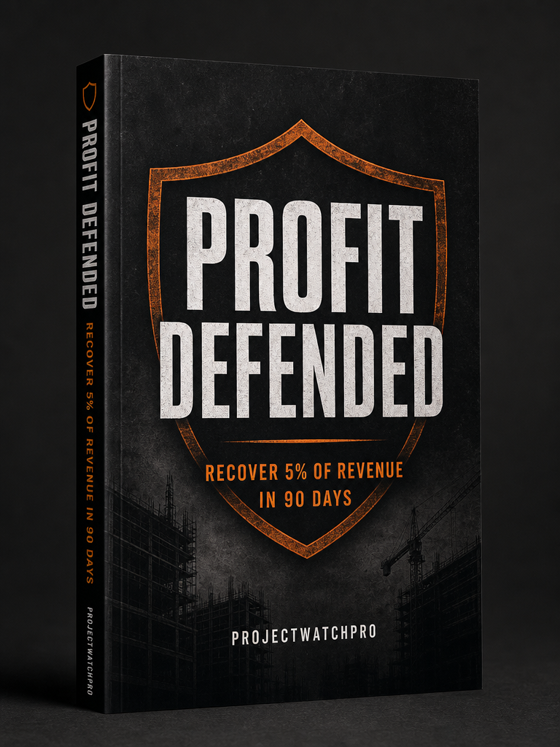
The book that explains why quoted profit disappears inside ordinary labour, overtime, rework, scheduling and information-lag problems — and how to stop finding out after the job is over.
LEARN MORE ->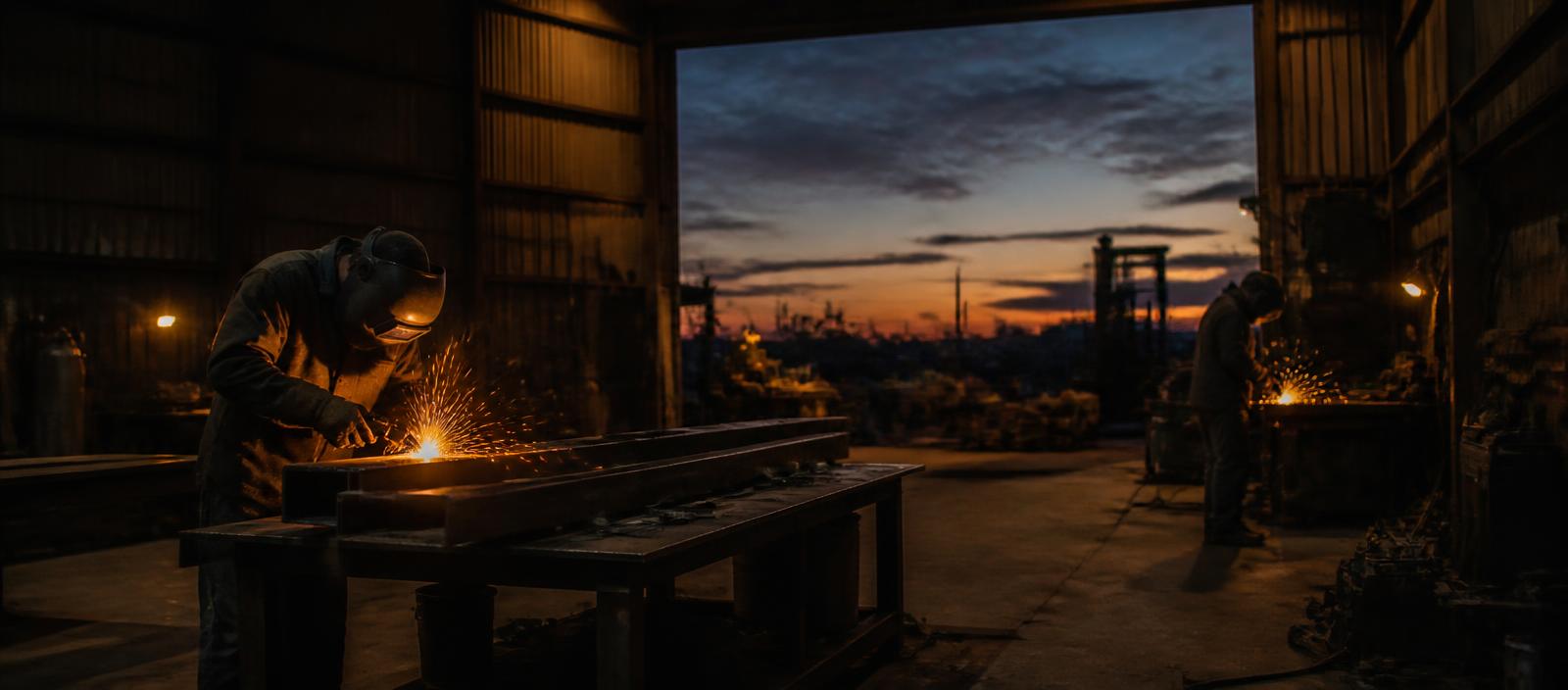
Fit-up, welding, finishing and inspection are separate work — and separate cost.
THE PPS + PWP WAY TO KEEP FABRICATION PROFIT UNDER CONTROL
Profit Pulse System builds the engine. ProjectWatchPRO automates the work.
A. How to fix it
- Calculate true labour cost — all layers.
- Break the job into shop tasks.
- Include welding consumables on the tasks that use them.
- Plan RT and OT before the work starts.
- Schedule people by task and estimated man-hours.
- Track actual hours and cost by task.
- Record extra work before it is done.
- Compare quote, charge-out and cost while the job is live.
- Close the job and get it billed.
B. How profit stays under control
- Build the quote from real cost.
- Break the job into tasks.
- Schedule people by task & hours.
- Track hours and cost as you go.
- Capture OT, consumables & extras.
- Compare cost, charge-out & quote.
- Fix problems before it's too late.
- Close the job cleanly.
- Bill fast and get paid.
C. PWP gives you
- Live job cost by task and total.
- RT, OT and cost visibility — in real time.
- Consumables tracked to the work that uses them.
- Schedule vs actual hours comparison.
- Quote vs charge-out vs true cost vs profit.
- Extra work workflow and change-order support.
- Accurate job costing and billing support.
- Dashboards that tell you the truth today, not weeks later.
D. What gets better
- More profit on every job.
- Fewer surprises and fire drills.
- Stronger cost control.
- Less overtime stress.
- Better schedule reliability.
- Cleaner handoffs and less rework.
- Faster billing and better cash flow.
- More owner confidence in the numbers.
What you actually see
Live job margin, while the job is still running
Where fabrication hours show up in the day-to-day view: quoted margin, margin right now, and the hours behind the number. Representative view.
REAL COMPANIES. REAL RESULTS.
- Abrasive Blast & Paint (Nisku, AB).
- Inside the first month using the original profit-control system, approximately $50,000 was added to profit.
- Monthly gains of roughly $10,000–$50,000 helped revenue grow from about $1.5M to about $7M in roughly 4–5 years, then beyond $10M after a new facility and financing.
Presented as proof of the durability of the operating method — not a guaranteed result for a fabrication shop.
READ THE FULL STORY ->HOW MUCH LONGER CAN YOU AFFORD TO WAIT?
If you recover just 5% of your monthly revenue, here's what that can look like: $2,000,000/month revenue → $100,000 / month → $1,200,000 a year in profit that stays in your company.
FIND OUT WHERE THE PROFIT IS DISAPPEARING.
We'll review one of your fabrication jobs and show you where quoted profit is being won — or lost — while the work is still controllable.
BOOK A PROFIT RECOVERY REVIEW45–60 Minute Session
Questions owners ask
How do you job cost a welding or fabrication shop?
Cost each welder at true labour cost — wage plus burden, shift differential and overtime — then track hours against the tasks quoted for that piece of work, with consumables and materials priced separately.
Why do fabrication jobs lose margin after the quote?
Usually rework, extra passes and unbilled shop time. They are small individually, which is why they only show up once the job is closed and the hours are already spent.
Can you see shop profit while a job is still in the bay?
Yes. With true cost and task hours in place, quoted margin and current margin can be compared while the work is running, not after delivery.
How are consumables and machine time handled?
They are priced and tracked apart from labour, so a job that goes over on wire, gas or machine hours is visible instead of being absorbed into the labour number.